Omnisend AI


 OFFER
OFFER








Creating brand-fit welcome messages in 2026 [+ examples]
With over 130+ pre-built integrations and flexible APIs, you can easily centralize data from across your tech stack
Make the most out of your data and unlock powerful growth marketing possibilities with these other top marketing tools.
Build any custom integration with our open, flexible APIs that are simple to use and implement.
Check out apps that have been stealing all the spotlight.
Email and SMS marketing insights, ecommerce resources, and the latest Omnisend news
Expert-led sessions covering email, SMS, and ecommerce marketing strategies.
Educational video and live training to help you make the most out of Omnisend.
Drive sales on autopilot with ecommerce-focused features
See Features
Welcome emails are crucial for ecommerce brands as they set the tone, build trust, and convert new subscribers into first-time customers.
These emails boast impressive metrics, with an average open rate of 34.79% and a click-to-conversion rate of 58.26%, indicating high engagement and purchase potential.
Effective welcome emails should clearly introduce the brand, set expectations for future communications, and include a compelling incentive or call to action to encourage immediate engagement.
Automating welcome emails ensures timely delivery, maximizing subscriber interest and engagement while streamlining the onboarding process.
A welcome email is one of the few messages you send when attention is naturally high. Someone has just signed up, they’re curious, and they’re deciding whether your brand is worth making room for in their inbox. That early moment matters more than many brands realise.
According to Omnisend’s 2026 Ecommerce Marketing Report, welcome messages and abandoned cart emails together drove 76% of all automation-generated orders, underscoring how powerful timely, high-intent emails can be. In this guide, we’ll break down 11 welcome email examples that get the basics right. That is, from clear brand introductions to smart incentives and strong calls to action. Along the way, we’ll also show you what makes these emails work, so you can borrow the best ideas and write a welcome email people actually want to open.
For an ecommerce brand, a welcome email does more than say hello. It most importantly acts as onboarding. It introduces the brand while interest is still fresh, gives new subscribers a reason to stay engaged, and helps turn a signup into a first order.
That matters because welcome emails consistently rank among the strongest-performing automated messages. One Omnisend benchmark shows that the average welcome email open rate is 34.79% and the click-to-conversion rate is 58.26%. This means that those who click are very likely to make a purchase. In a wider view, Omnisend’s 2026 research shows that automated emails do better than scheduled campaigns in both interest and revenue. Automated emails have an open rate of 38% and generate $2.87 per email, while regular campaigns only generate $0.18.
That performance is only part of the story. Welcome emails also create the first real impression of your brand in the inbox. They allow you to set expectations early. This includes explaining what kind of content subscribers will get, how often you’ll email, or why your products are worth noticing. When done well, they build trust right away by turning uncertainty into clarity. They also create a natural place to introduce an incentive, highlight bestsellers, or explain your brand story in a way that feels useful rather than pushy.
Island Olive Oil is a strong example of this. Its three-email welcome series introduced the store, the people behind the brand, and the products, helping the company feel more boutique and personal online. According to Omnisend’s case study, that series produced a 998% higher click rate than promotional emails, an average conversion rate of 11%, and a 3,274% lift in revenue per email.
So while welcome emails are often treated as a basic automation, they do some of the most important early work in ecommerce: they set the tone, establish trust, and give new subscribers a compelling reason to make that first purchase.
There’s no single formula for a great welcome email, but the best ones all do one thing well: they give new subscribers a clear reason to keep paying attention. The examples below show different ways brands pull that off, from introducing their story and products to offering a first-purchase incentive or setting the tone for future emails.
Brand: Jumeirah
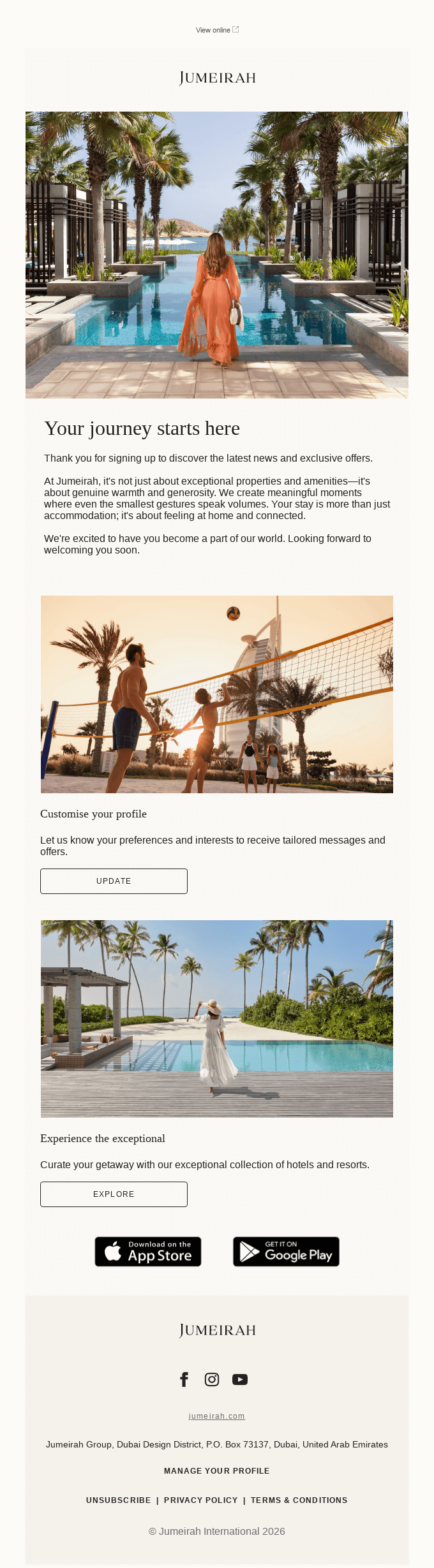
This is a strong example of a simple welcome email because it doesn’t try to do too much at once. Jumeirah uses beautiful resort imagery, a calm “Your journey starts here” headline, and a short brand-led introduction to make the email feel aspirational from the start. It then nudges subscribers towards a few next steps, like completing a profile, exploring offers, or downloading the app.
What we love about this email: how confidently it sells the brand experience without sounding salesy. The layout feels polished, the copy is light, and the message gives new subscribers an immediate sense of what Jumeirah is about. It’s a good reminder that sometimes a welcome email works best when it simply sets the mood and makes the brand memorable.
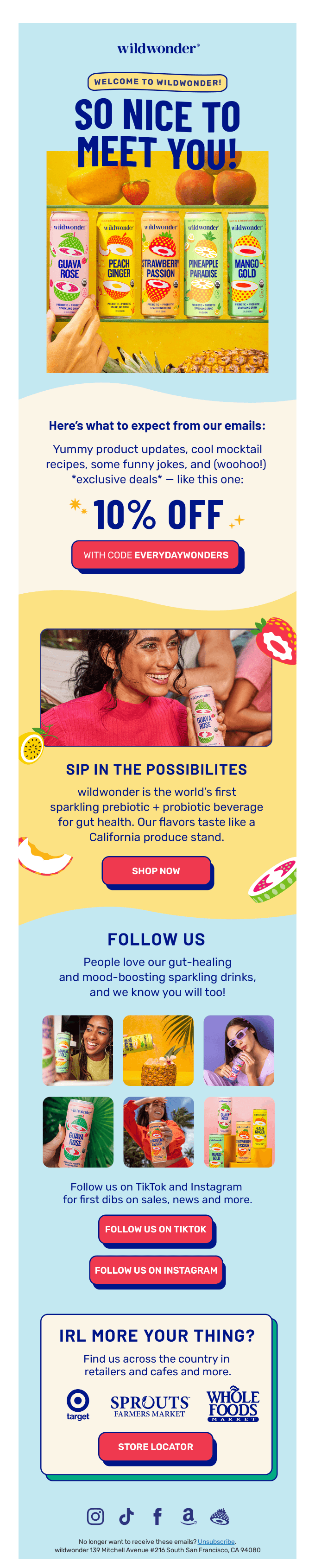
This welcome email works because it gives new subscribers an immediate reason to act. Instead of going into detail about the brand, Wildwonder quickly sets expectations for future emails and highlights the discount while the subscriber’s interest is still high. It also supports the offer with product images and sections that show off the drink’s flavor and personality. This approach makes the discount feel like part of a complete brand experience rather than just a random promotion.
What we love about this email: that it balances conversion and brand-building effectively. The 10% offer stands out clearly. At the same time, the playful design, lifestyle images, and social links give the brand a lively and unique feel.
Brand: Material
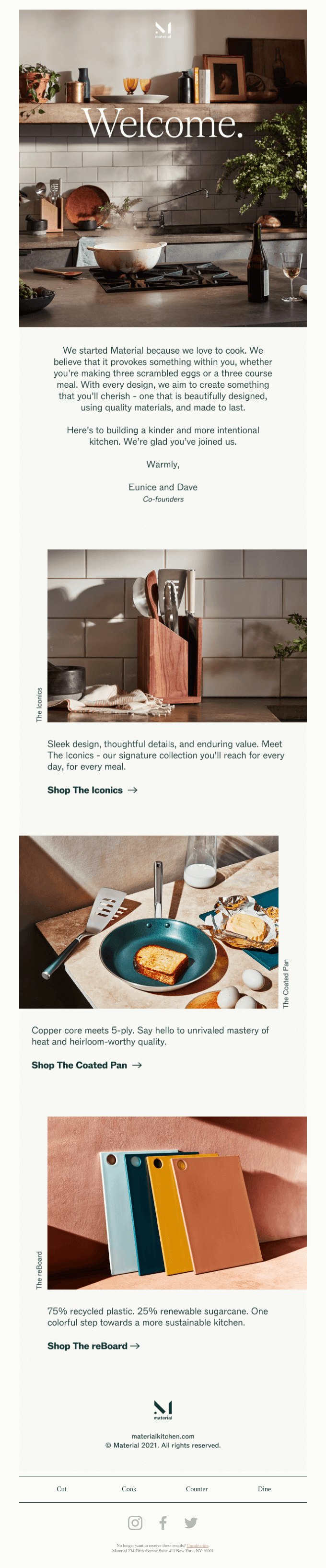
This welcome email is effective because it starts with a story rather than a promotion. It includes a note from founders Eunice and Dave, who explain the problem that inspired the brand. They wanted snack options that were nutritious, convenient, and enjoyable, so they developed the tools to make their own. That immediately gives the email a more personal feel than a standard discount-led welcome message, and the “Shop The…” CTAs invite readers to keep exploring rather than pushing for a hard sell too early.
What we love about this email: the human touch. The founders’ brand photo and signature make the message more credible and personal. The copy speaks directly to health-conscious kitchen shoppers in a natural way. This serves as a good reminder that a welcome email can create a connection before it requests a purchase.
Brand: Original Grain
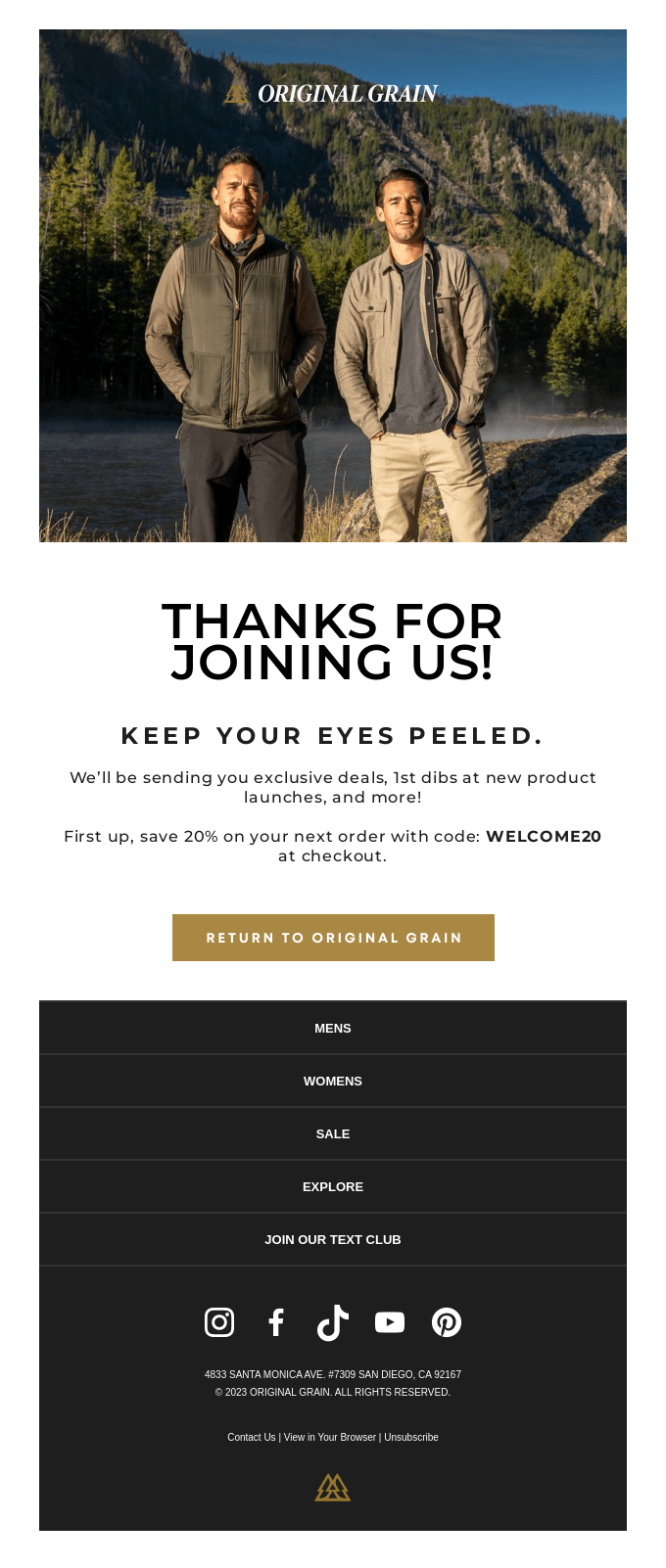
This email works because it makes things clear from the start. Original Grain doesn’t leave new subscribers wondering what they signed up for — it tells them they’ll get exclusive offers, early access to launches, and brand updates. That clarity helps the email feel more intentional, while the discount adds a strong reason to take action right away.
What we love about this email: its simplicity. The text is clear. The promise is simple. The design matches the brand’s outdoor, high-quality image. It shows how a welcome email can set clear expectations and encourage customers to make their first purchase without being too complicated.
Brand: Naked Life

This email works because it wastes very little time getting shoppers to the good stuff. After a short welcome and offer, Naked Life uses large product visuals, social proof, and multiple product sections to guide subscribers towards its bestsellers. That makes the email feel useful straight away, especially for new customers who may not know where to start.
What we love about this email: that it blends discovery with conversion. The design remains preferable to the eye and clean. It also provides enough product details to grab attention. This is a good example of how a welcome email can serve as a carefully selected first visit to a store, rather than just an introduction.
Brand: Kurk

This email works well because it tackles a common problem in welcome emails. It builds trust in a product that new customers have just discovered. Rather than relying solely on brand messaging, Kurk offers proof that other customers are happy with their purchases. This approach makes the email seem more trustworthy, especially in a product category where shoppers often seek reassurance before making their first buy.
What we love about this email: that it doesn’t treat trust as something that happens later. It builds confidence right inside the welcome message, while interest is still high. For ecommerce brands, that’s a smart move, especially when you’re introducing a less familiar product and want to reduce hesitation early.
Brand: Lyka

This email works because it treats the welcome message like onboarding, not just an introduction. Lyka knows a first delivery can come with questions, so instead of jumping straight into promotion, it explains how to prepare: make room in the freezer, avoid snacks for a week, and establish a mealtime routine. That makes the brand feel helpful straight away.
What we love about this email: how useful it is. It lowers friction, sets customers up for a better first experience, and reinforces trust by showing that Lyka wants people to succeed with the product after they buy, not just before.
Brand: Health-Ade

This email works because it shifts the focus from a generic welcome to the product’s customer-facing value. Instead of spending too much time introducing the brand, it moves quickly towards the reason someone might actually want to buy: what they’ll get from trying the product in the first place. That approach is especially effective in welcome emails, where clarity often matters more than cleverness.
What we love about this email: the angle. A benefits-led welcome email helps new subscribers connect the product to their own lifestyle, needs, or routines right away. It gives the message a more practical purpose and makes the next step feel easier. For ecommerce brands, that’s a smart reminder that a welcome email doesn’t always need a long introduction — sometimes the strongest move is showing why the product deserves attention.
Brand: Go Fast Campers

This email works because it welcomes subscribers into something bigger than a product catalogue. Instead of pushing straight for a sale, Go Fast Campers uses the message to introduce “Camp GFC” as a community, which helps the brand feel identity-led rather than purely transactional. A third-party breakdown of the email notes that the brand encourages prospects to join its community first, creating a softer path into the relationship.
What we love about this email: the positioning. It suggests that buying from the brand is tied to a lifestyle and a set of shared values, not just a one-off purchase. For ecommerce brands with a strong audience identity, leading with a discount alone can be far more memorable.
Brand: Yellowbird Sauce

This email is effective because it shows new subscribers where to begin. Instead of focusing on just one product or only offering discounts, Yellowbird Sauce treats the welcome email like a simple, guided store. This method benefits first-time shoppers who may already like the brand but need assistance finding their options.
What we like about this email: it promotes exploration. The categories are clear; the visuals do a lot of the selling, and the layout allows for easy browsing without being overwhelming. For brands with several product lines, this is a smart way to handle welcome emails.
Brand: Blueland
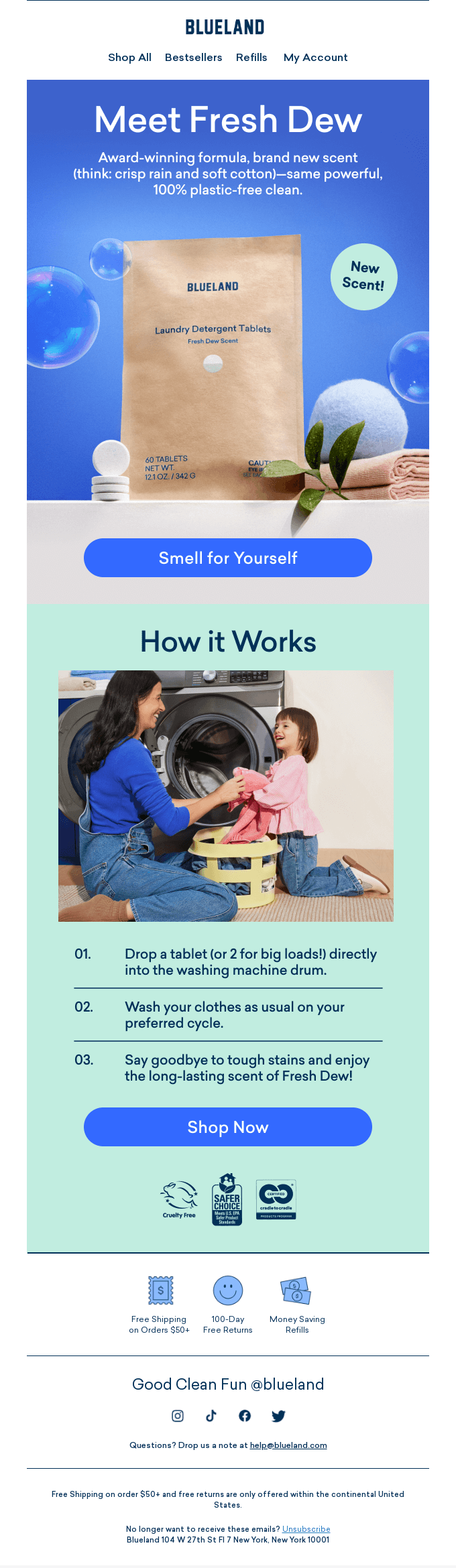
This email works because it answers a practical question before the customer has to ask it. For products that aren’t completely self-explanatory, that matters. Blueland uses the welcome email to reduce hesitation, show how easy the product is to use, and keep the path to purchase feeling straightforward.
What we love about this email: that the product education feels light, not heavy. The steps are quick to scan, the visuals help tell the story, and the whole message makes trying something new feel low-effort. For ecommerce brands with less familiar products, that’s a very smart move for a welcome email.
The best welcome emails may look different on the surface, but they tend to rely on the same building blocks underneath. Before you write your own, it helps to understand which elements make a welcome email feel clear, trustworthy, and worth acting on.
A welcome email should quickly answer two basic questions: who are you, and why should someone care? That doesn’t mean telling your whole brand story in one message. It means giving subscribers a clear sense of your mission, what sets your products apart, and the kind of experience they can expect from you.
This is also the right place to set expectations for future emails. Let people know whether you’ll be sharing product launches, useful tips, exclusive offers, or behind-the-scenes updates. That early clarity helps your emails feel more intentional and gives subscribers a better reason to stay engaged.
A welcome email should give subscribers a clear reason to take the next step. For many brands, that means a first-order discount, but it could just as easily be free shipping, a gift with purchase, or an early loyalty reward. The exact offer matters less than making it feel relevant and easy to use.
The best incentives lower the barrier to a first purchase without training customers to expect constant discounts. A good first offer should feel like a genuine welcome, not a desperate push. Keep it visible, explain it clearly, and pair it with a strong call to action so people know exactly what to do next.
A welcome email should never leave subscribers wondering what to do next. Once you’ve introduced the brand and made the offer clear, guide them towards one simple action. That could mean browsing your bestselling products, completing a profile or preferences quiz, or following your brand on social media.
The goal is to keep the momentum going while interest is still fresh. Clear next steps make the email feel more useful and less passive. They also help move subscribers into the right journey, whether that’s making a first purchase, personalising future emails, or staying connected with your brand beyond the inbox.
The design of your welcome email should feel instantly recognisable. Product images help subscribers see what you sell, lifestyle visuals show the world around the brand, and typography ties the whole message together. Even before someone reads every line, the design should give them a sense of your style, quality, and audience.
That doesn’t mean adding visual clutter. The best welcome emails use design to support the message, not distract from it. Choose imagery that feels consistent with your site and social channels, keep the layout easy to scan, and ensure the overall look reinforces the brand relationship you want to build.
A welcome email should make the next move feel obvious. That’s where a strong call to action matters. Phrases like Shop now, Explore collection, or Start shopping work well because they’re clear, direct, and easy to act on. A subscriber should never have to guess where to click or what happens next.
The best CTAs also align with the email’s goal. If the focus is on a first purchase, send people to a product category or bestselling collection. If the goal is discovery, guide them towards a curated page instead. Keep the wording simple and make the button stand out visually.
Email automation ensures your new subscribers receive a timely and engaging welcome email, freeing you from manual effort and improving efficiency.
Omnisend simplifies the process with an intuitive drag-and-drop email builder, ready-to-use templates, and advanced automation features. Its built-in analytics and performance tracking help you monitor open rates, click-through rates, and conversions.
Here’s a step-by-step guide to setting up your welcome email using Omnisend:
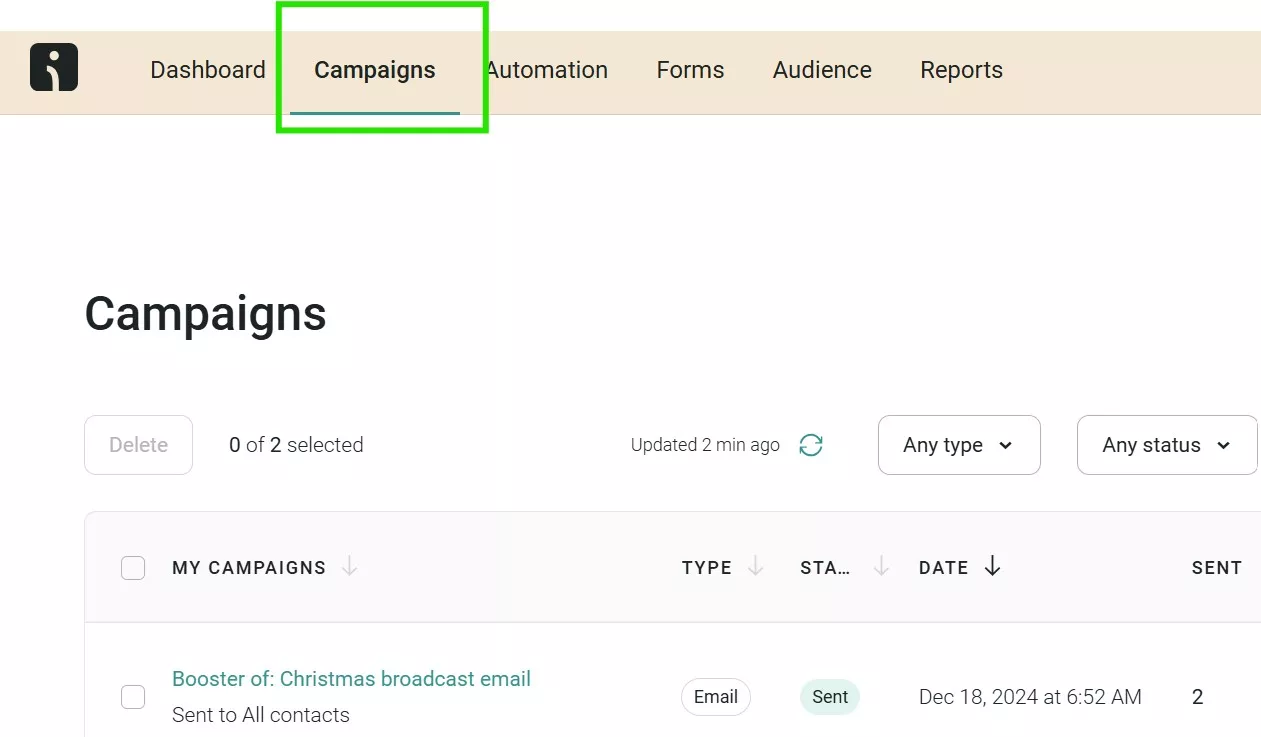
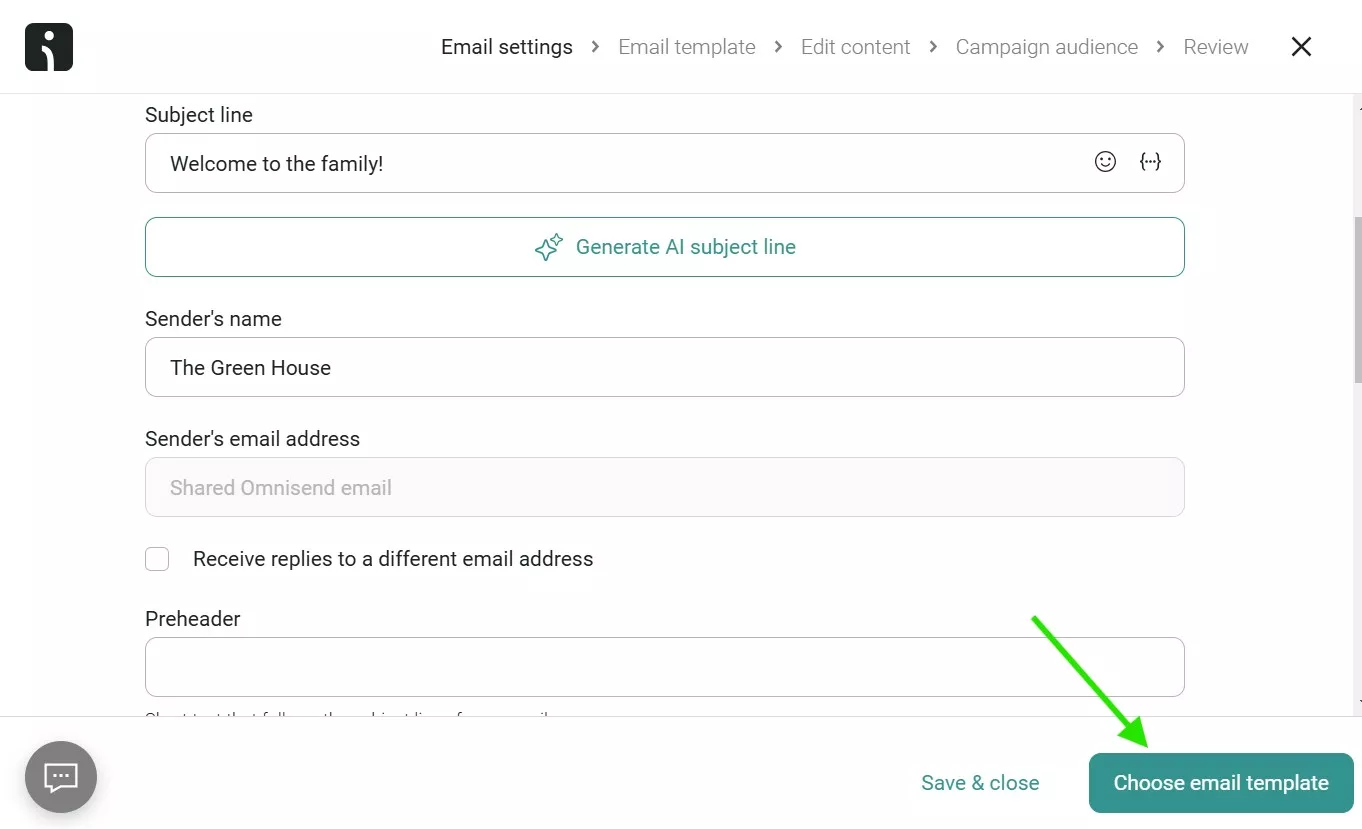
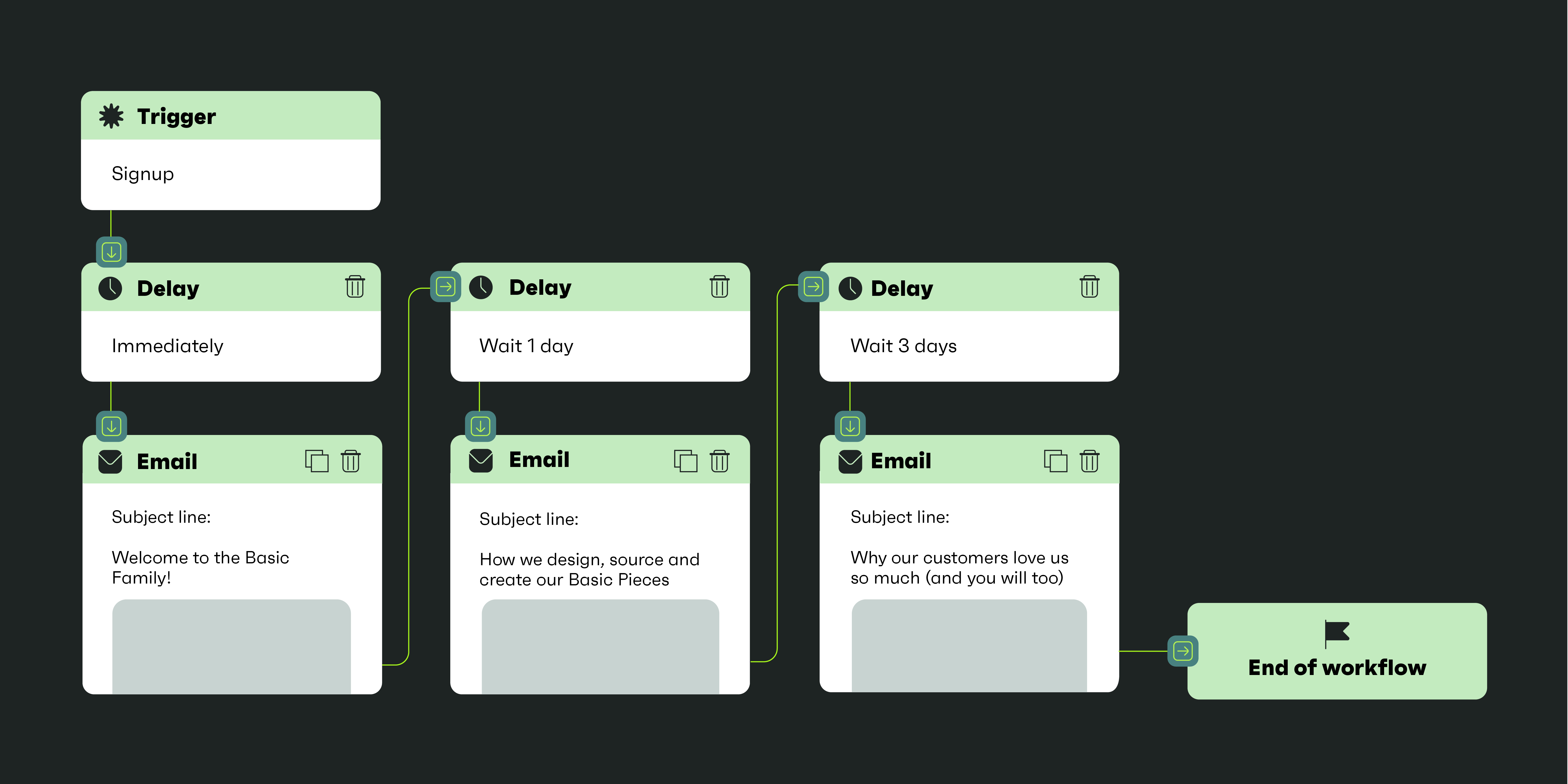
You can decide to have one or more automated emails in your welcome email series, as it’s one of the most important customer retention strategies. For instance, in a three-part welcome email, the flow can be:
Your email capture form should trigger a welcome email within a few minutes to maximize engagement. If delayed, subscribers may get distracted and forget about your brand.
However, you can also automate your welcome email to be sent at specific times of the day. For example, the best time to email is 2 PM, 5 PM, and 8 PM on weekdays. You can try it and compare the results with the emails you send immediately after a signup.
 | About 12% of Divatress’ marketing messages are sent through automated workflows, including its two-message welcome series. The first email in this series converted at 11% and generated $7.53 in revenue per email. |
Personalizing your welcome emails starts with dividing your email list into diverse groups. With Omnisend, you can group subscribers based on their signup source, purchase behavior, or interests.
This customer lifecycle segmentation allows you to send targeted messages, such as exclusive discounts for first-time buyers or tailored content for returning customers.
Here’s a quick Omnisend tutorial that offers the basic knowledge you need to automate your welcome emails:
Omnisend streamlines your best welcome emails with automation and fully customizable templates — so you can deliver a polished first impression without getting lost in the setup. Owing to its usability, it has a rating of 4.7 on Shopify and 4.6 on G2.
Sign up for a free account to get started. Learn more about Omnisend.
Welcome emails do some of the most important early work in ecommerce. They introduce your brand, shape the first impression, set expectations for future messages, build trust, and give new subscribers a reason to make that first purchase. But to get those results consistently, you need more than a one-off email, you need automation. An automated welcome flow helps you reach every new subscriber at the right moment with the right message, without sending anything manually. Once it’s set up, it keeps working in the background, turning new signups into engaged subscribers and, ideally, first-time customers.
Keep it short enough to scan in seconds. A good welcome email usually includes a brief intro, one key offer or message, and one clear CTA. Omnisend’s guidance also recommends short paragraphs and readability-first design.
At minimum, a short brand introduction, what subscribers can expect, a first offer if relevant, a clear CTA, and basic trust-builders like branding, key links, or social proof. Those elements help set expectations and guide the next step.
They can, but they do not have to. A discount, free shipping, or another first offer can encourage the first purchase, especially in ecommerce. The key is making the incentive feel relevant and easy to use, not overly aggressive.
One Omnisend benchmark reports an average welcome email open rate of 34.79%. The same benchmark reports a 58.26% click-to-conversion rate, which helps explain why welcome emails are such a valuable automation.
A welcome series often works best as three to four emails. That gives you enough room to introduce the brand, share an offer, and highlight products or value without overwhelming new subscribers. Island Olive Oil’s three-email flow is one strong example.

TABLE OF CONTENTS
TABLE OF CONTENTS

What’s next


No fluff, no spam, no corporate filler. Just a friendly letter, twice a month.