- Features
- Pricing
- Migration
- Integrations
- Resources

With over 200+ pre-built integrations and flexible APIs, you can easily centralize data from across your tech stack
Make the most out of your data and unlock powerful growth marketing possibilities with these other top marketing tools.
Build any custom integration with our open, flexible APIs that are simple to use and implement.
Check out apps that have been stealing all the spotlight.
Email and SMS marketing insights, ecommerce resources, and the latest Omnisend news
Expert-led sessions covering email, SMS, and ecommerce marketing strategies.
Educational video and live training to help you make the most out of Omnisend.
Summer may still be in full swing, but for many parents, back-to-school season has already begun. What used to be the “August rush” has morphed into an extended, highly strategic five-month shopping window.
Our new survey of more than 3,000 consumers across the U.S., UK, and Canada explores how families are adapting to rising prices and shopping stress by starting earlier, spreading purchases over time, and turning to new payment strategies to make the numbers work.
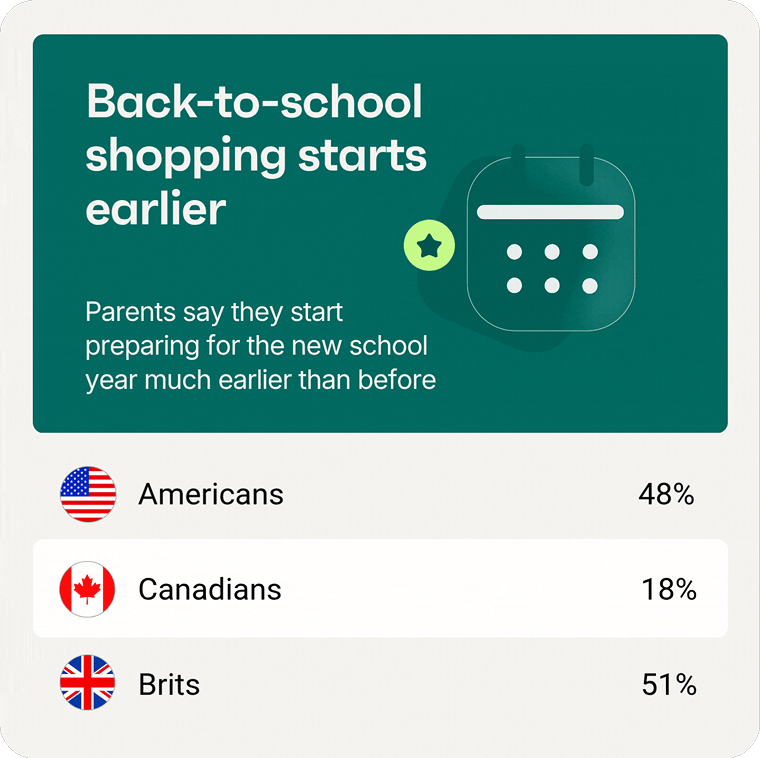
Back-to-school shopping may have been an August job in the past, but this year, many families are getting a much earlier start. Around half of consumers across the U.S. (48%), UK (51%), and Canada (45%) say they’ll begin shopping earlier than usual, with 16% to 23% saying they’ll start “much” earlier.
The shift comes as families prepare for another expensive back-to-school season. According to The Century Foundation, school supply prices rose by 7% last year. In our survey, 45% of Americans, 32% of Brits, and 64% of Canadians say they’re worried prices will rise further.
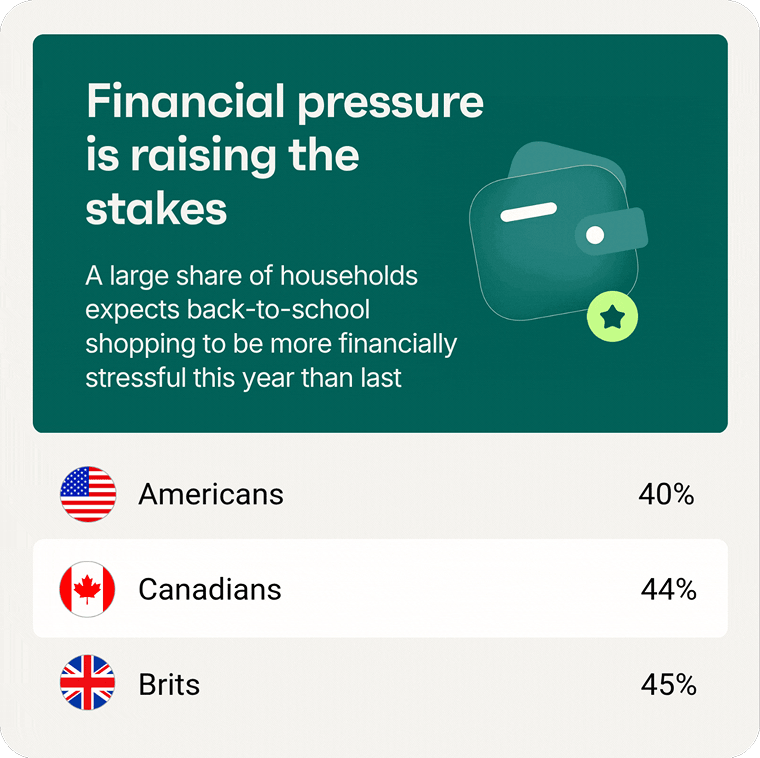
Overall, 40% of Americans, 45% of Brits, and 44% of Canadians expect back-to-school shopping to be more financially stressful this year than last, with 6% to 12% saying it will be “much more” stressful. Parents are most concerned about affording essential items such as shoes and uniforms, followed by electronics as well as basic school supplies like notebooks or pens. In total, 44% of American, 25% of British, and 39% of Canadian households expect to spend more than $500 for school supplies this year, while 9%-19% might spend even more than $1,000.
One of the most obvious changes to back-to-school shopping is what counts as a ‘school essential.’ A decade ago, parents mainly worried about clothing and stationery. Today, many also have to budget for technology because so much of learning, homework and communication happens digitally. Whether it’s a school-issued device that needs replacing or a family computer students rely on at home, technology has become part of the cost of participating in school, not just an optional extra
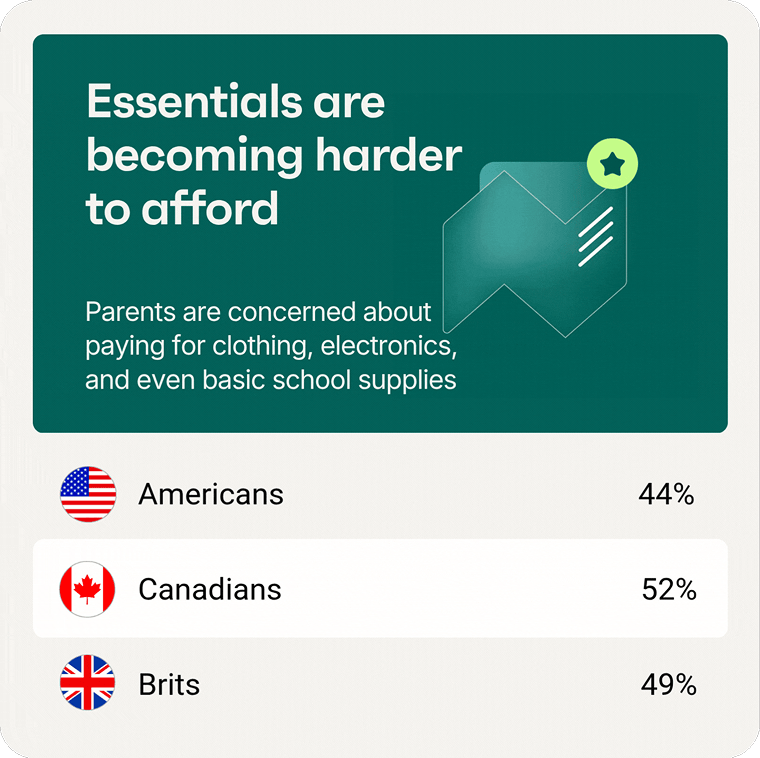
The pressure is not only financial. Many parents are also worried about how household budgets could affect their children emotionally. 44% of parents in the U.S., 49% in the UK, and 52% in Canada fear their children may feel left out if they cannot afford items their classmates have. 28%-29% say they buy certain items their child wants specifically to prevent that.
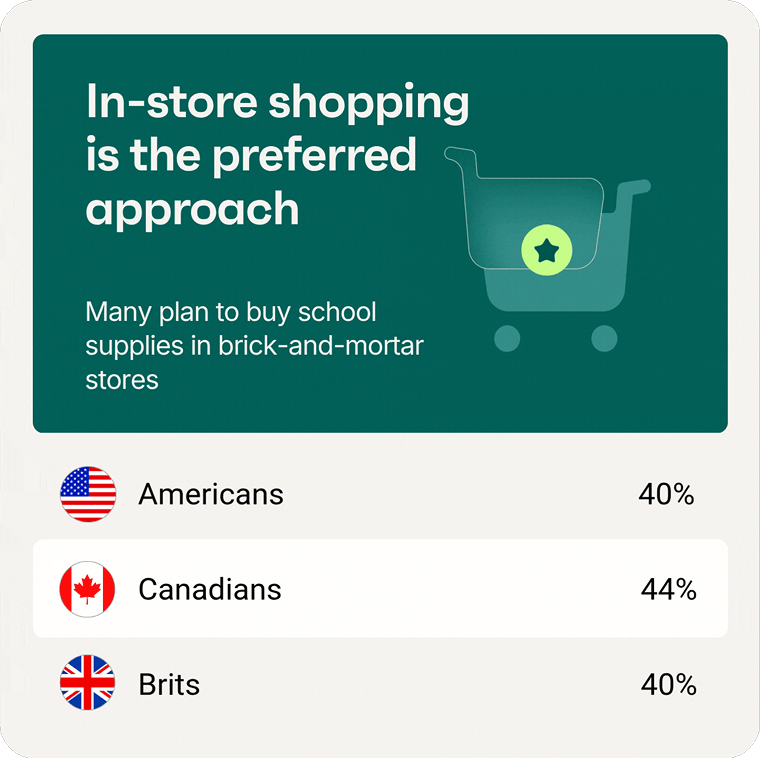
For many families, keeping back-to-school costs under control starts with where they shop. 40% in both the U.S. and the UK, as well as 44% in Canada, are shopping for school supplies in-store this year, while 20-26% across markets are opting for online shopping. 34%-36% go for a mix of both. Large retailers like Walmart and Amazon are most popular among North American households, whereas Brits mostly buy from Asda and Tesco.
Whether parents shop online or in-store, most are trying to keep things simple by buying everything from a single retailer or platform. That means fewer trips, less time spent comparing prices, and easier access to the discounts and rewards stores offer during the back-to-school season. For families with long shopping lists, buying everything in one place doesn’t just save time, it can also help stretch the household budget
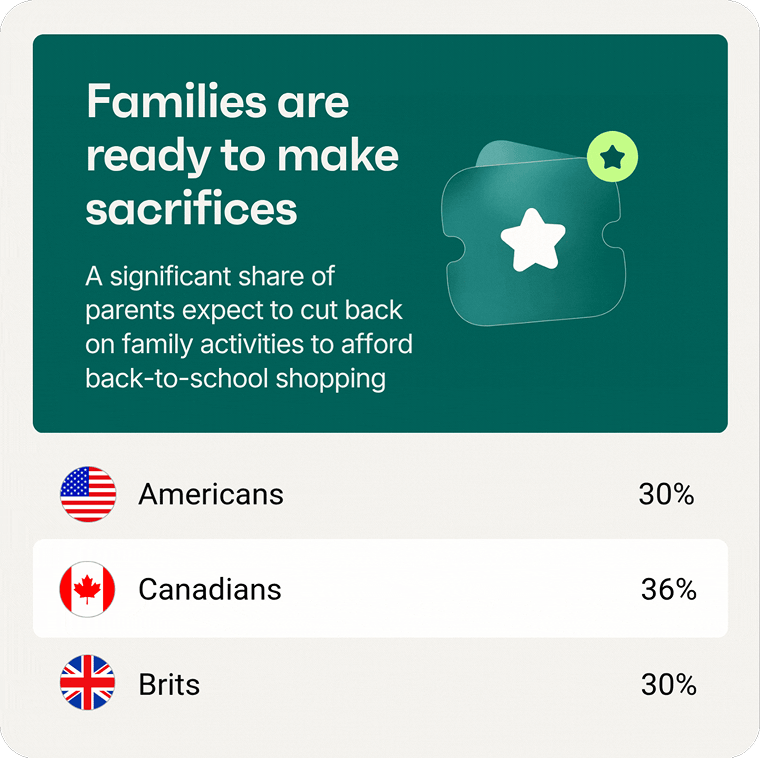
Even so, many households expect they’ll need to make sacrifices to afford everything on their children’s school lists. While 16%-22% across markets say they’ll only buy essential items this year, even more say they’ll purchase everything their child needs despite the financial strain. That includes 30% of Americans, 33% of Brits, and 26% of Canadians. To make that possible, some families are cutting back on family entertainment, using credit or savings meant for something else, and even borrowing money from friends or family.
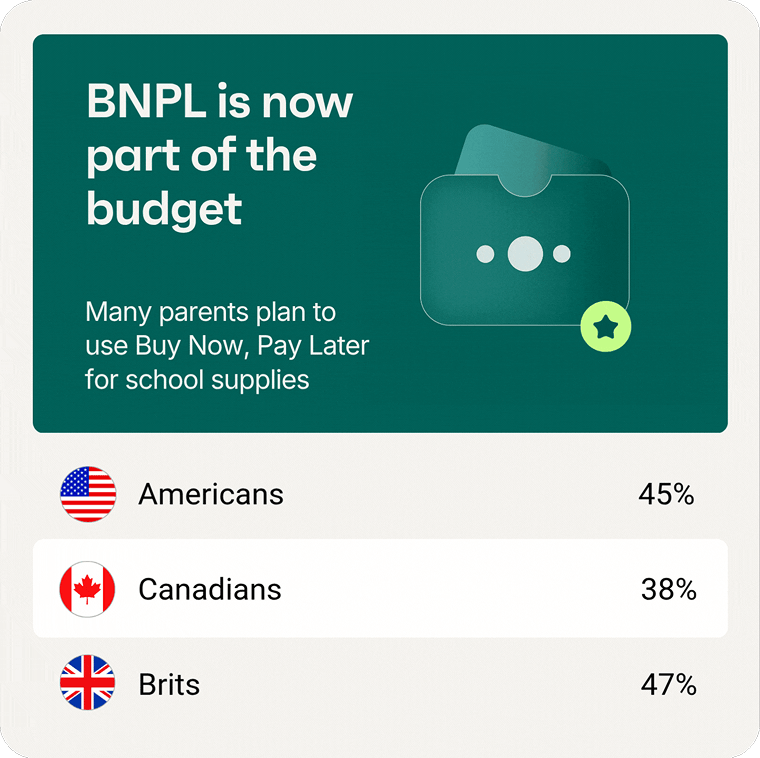
Another way families are managing back-to-school costs is through Buy Now, Pay Later. This year, 45% of Americans, 47% of Brits, and 38% of Canadians plan to use BNPL, up from 39%, 38%, and 24%, respectively, last year. The services are primarily used for the very items parents worry most about affording, including shoes, uniforms and other clothing, electronics, and stationery.
For many households, BNPL will cover a substantial share of back-to-school spending. In the U.S., 31% expect to finance more than half of their back-to-school budget this way, compared with 18% in both the UK and Canada. Across all three countries, however, the most common expectation is to put between 26% and 50% of total back-to-school spending on BNPL.
Buy Now, Pay Later was once associated with splurges and impulse purchases. Today, it's increasingly being used for routine expenses. Parents know back-to-school shopping is coming every year, so the fact that so many still choose BNPL suggests the challenge isn't a lack of planning, but a lack of financial breathing room. Consumers are using flexible payment options to manage everyday cash flow, not just unexpected costs
For retailers that want to take full advantage of this demand, Bauer recommends the following:
The survey was commissioned by Omnisend and conducted by Cint in March 2026. It included 1,075 respondents from the U.S., 1,114 from the UK, and 1,068 from Canada. Quotas were placed on age, gender, income, and place of residence to achieve a nationally representative sample among users. The margin of error is +/-3 percent.
Self-reported survey data reflect stated intentions and perceptions, not observed behavior. Results are subject to recall and social desirability bias. Findings are representative of the sampled population and may not reflect all U.S. adult consumers.
The main drivers are economic: fear of rising prices, worry that popular items will sell out, and a desire to spread costs over time.
Shoes, uniforms/clothing, and electronics top the list.
This year, 45% of Americans, 47% of Brits, and 38% of Canadians plan to use BNPL services for back-to-school purchases. In comparison, last year's usage was 39%, 38%, and 24%, respectively.
In the US, 66% will put up to 50% of their back-to-school spending on BNPL, versus 78% of Brits and 81% of Canadians.
40% of Americans, 45% of Brits, and 44% of Canadians expect this year's back-to-school shopping to be more stressful than last year's.
Yes, 30% of Americans and Brits, and 36% of Canadians say they're ready to cut back on family activities and entertainment to cover back-to-school costs.
Over half of Canadian parents (52%) and around half of American and British parents (44% and 49%) worry about their child feeling excluded if they can't match what classmates have, and many parents say they'll buy whatever their child needs even if it strains their budget.
Reach out to our Public Relations team by
email [email protected] for more details. We're here to
help and provide any additional information you might need.
Omnisend is a leading email and SMS marketing platform, trusted by over 150,000+ brands worldwide and with a 4.7-star rating from more than 6,000 Shopify reviews. With powerful tools like automation, segmentation, reporting, push notifications, and product reviews, Omnisend merchants generate $79 for every $1 spent.
Learn more